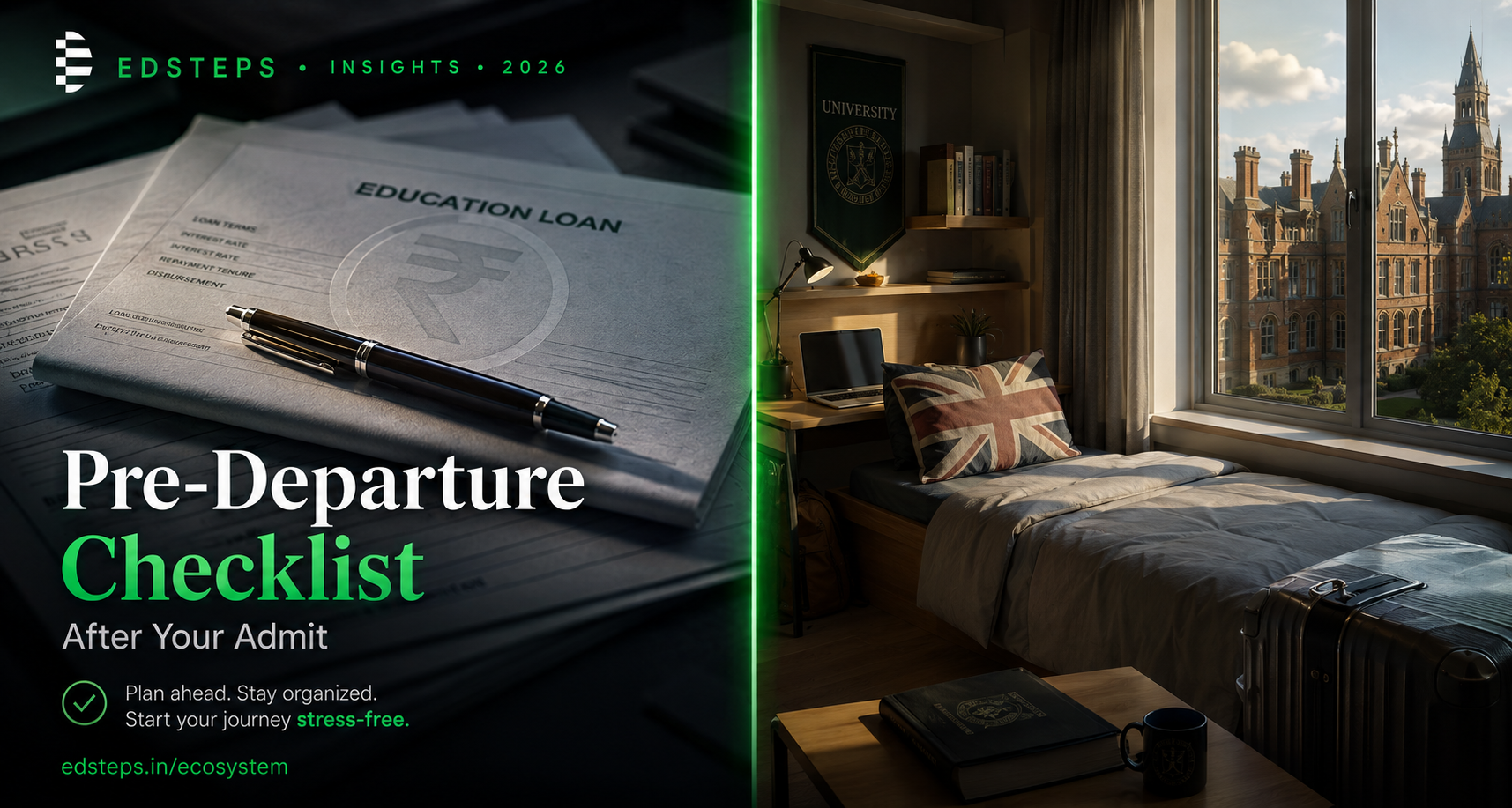
Quick answer: These are the two largest financial decisions after the admit, and they are linked — your loan sanction usually gates your visa, and your accommodation contract may be part of your visa file. Typical study loans run ₹25–40 lakh; the effective monthly cost of a ₹40 lakh loan is roughly ₹50,000–55,000 for ten years. Accommodation booked remotely should never be paid for without independent verification. Here is how both actually work.
Part one: the education loan
What you are actually borrowing. Study abroad loans in India typically cover tuition plus living expenses, ranging ₹25–40 lakh for a Master's, more for longer programmes or expensive destinations. Lenders fall into three groups — public sector banks, private banks, and NBFCs — and they differ substantially on rate, collateral requirement, processing speed and flexibility.
The number that matters is the monthly one. Students compare interest rates; families feel EMIs. A ₹40 lakh loan at prevailing Indian rates costs roughly ₹50,000–55,000 per month across a ten-year tenure. Run that number against realistic starting salaries in your destination and in India, because a meaningful share of graduates return.
The moratorium decides your first working year. Most education loans offer a moratorium — course duration plus six to twelve months — before EMIs begin. Whether interest accrues during that period, and whether you can service it partially, changes your total cost significantly. Ask explicitly.
Collateral changes everything. Secured loans against property or deposits carry materially lower rates than unsecured ones. If collateral is available, the saving across ten years is substantial. If it is not, compare unsecured options carefully — the spread between lenders is wider than most students assume.
Timing: start immediately after your admit. Sanction takes two to four weeks, and your visa application usually needs the sanction letter as proof of funds. Students who begin the loan process after booking their visa appointment routinely miss slots.
- Effective interest rate (not headline rate)
- Collateral requirement details
- Moratorium terms and interest accruals
- Processing fees and hidden costs
- Prepayment penalties
- Disbursement schedules against university deadlines
Part two: accommodation
University housing versus private. University accommodation is usually cheaper, closer, and simpler to contract — but limited, competitive, and often allocated by lottery or deadline. Private student housing offers more choice, more flexibility on dates, and considerably more variance in quality and contract terms across popular destinations like the United Kingdom and the United States.
The remote booking problem. You are committing thousands of pounds, euros or dollars to a property you have never seen, in a city you have never visited, on a contract written in a legal system you do not know. Photographs are marketing. Reviews can be thin. The distance from campus that looks walkable on a map may be forty minutes in winter.
- Notice periods and break clauses
- Deposit terms and what counts as damage
- Whether bills are included or estimated
- The exact start date against your arrival date
- Joint versus individual liability in shared housing
Timing: begin within two weeks of your admit. For autumn intakes, good options near campus are largely gone by early summer, and late searches face both higher prices and worse locations.
Budget realistically. Beyond rent: deposit (often one to two months), agency fees where applicable, utilities if not included, and contents insurance. Ask for the total annual cost, not the monthly headline.
Why these two are linked
Your loan sanction gates your visa. Your accommodation contract may form part of your visa file. Your loan disbursement schedule must match both your university's fee deadlines and your accommodation deposit date. Handled separately, by separate companies, this is where students lose weeks.
EdSteps arranges both inside one platform: education loans through partner lenders and verified accommodation, with our concierge team checking every property and every contract before a rupee moves — and your documents carrying across both from your Vault instead of being re-submitted.
Frequently asked questions
Typical study abroad loans range ₹25–40 lakh for a Master's, covering tuition and living costs. The amount depends on the course, destination, your collateral and your co-applicant's profile.
Roughly ₹50,000–55,000 per month over a ten-year tenure at prevailing Indian rates. The exact figure depends on your interest rate, tenure and moratorium terms.
Not always. Secured loans against property or deposits carry lower rates; unsecured loans are available but priced higher, with wider variation between lenders.
Immediately after your admit. Sanction takes two to four weeks, and the sanction letter is usually required as proof of funds for your visa application.
University housing is usually cheaper and simpler to contract but limited and competitive. Private housing offers more choice and flexibility with greater variance in quality. Book either within two weeks of your admit.
Never pay before the property and the contract have been independently verified. Check the actual distance to campus, confirm what is included in rent, and read the notice period and deposit terms before signing.
Arranging your education loan or accommodation through EdSteps costs no extra — we're paid by the provider, and every option is verified before you commit.