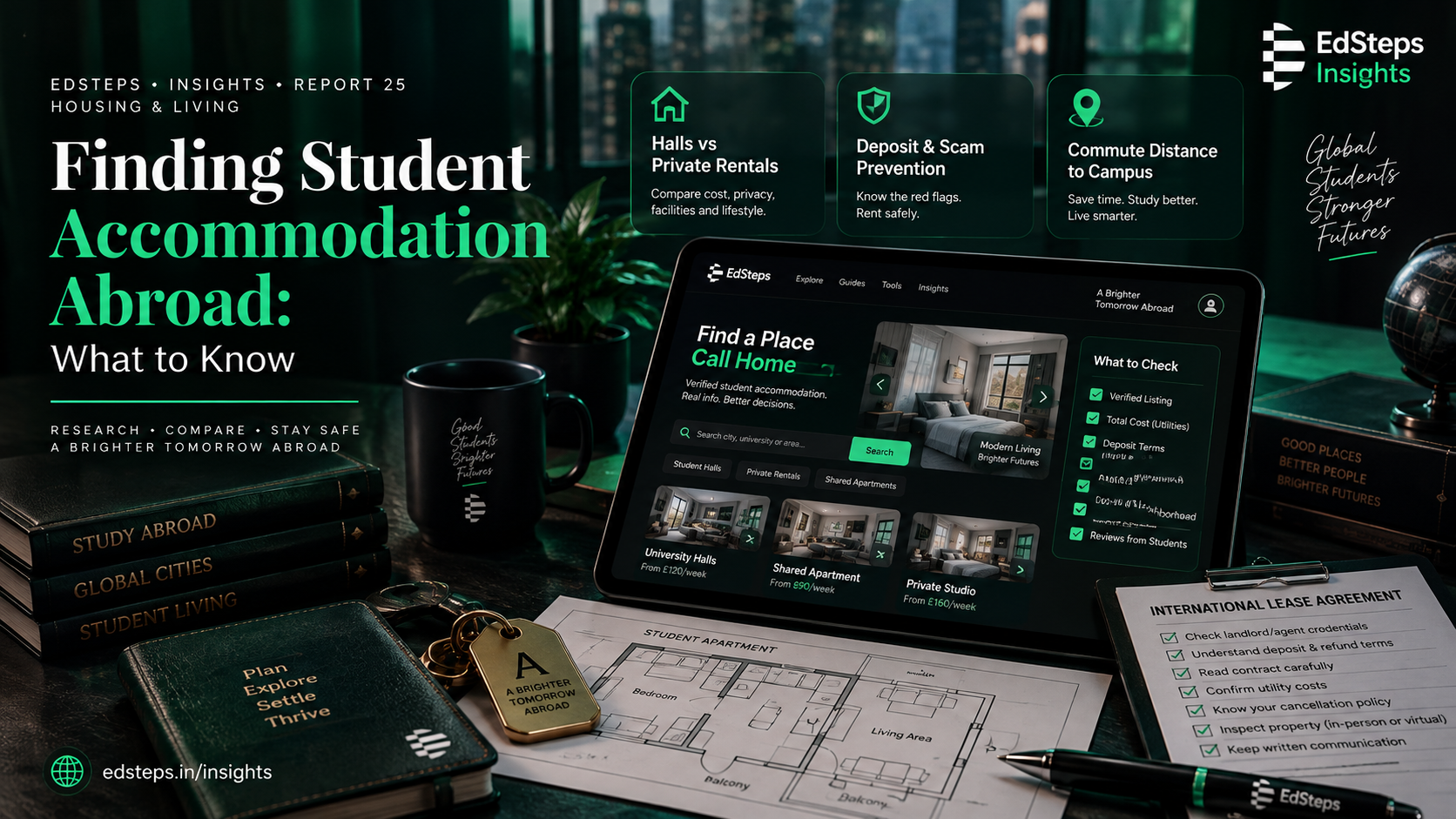
Moving abroad for university is an exciting milestone filled with opportunities for academic growth, cultural immersion, and personal independence. However, before embarking on this journey, securing suitable accommodation is one of the most critical decisions students must make.
The choice between university-provided student housing and a private flat impacts not only your budget, but also your lifestyle, social experiences, daily commute time, and overall well-being.
Understanding Your Accommodation Options
Before committing to a contract from thousands of miles away, it is essential to weigh the trade-offs of the two primary models:
University-provided housing designed to foster structured living and a vibrant campus community.
Pros:- ✓Hassle-free: Rent almost always includes utilities, Wi-Fi, and maintenance.
- ✓Social onboarding: Natural way to meet fellow students during induction week.
- ✓Proximity: Minimal commute times and zero local transport fees.
- ✕Limited privacy: Shared kitchens can be crowded, messy, and noisy.
- ✕Rigid contracts: Rarely allow subletting or early termination.
For students who prefer greater autonomy and an authentic, real-world residential experience.
Pros:- ✓True independence: Complete control over your space, cooking, and schedule.
- ✓Custom terms: Ability to choose flatmates, neighborhood, and layout.
- ✓Life skills: Managing council tax exemptions, utility bills, and leases.
- ✕High administrative load: Handling deposits, guarantors, and maintenance.
- ✕Scam vulnerability: Higher risk when renting unseen from overseas.
Lessons from the Housing Search Experience
Securing a private flat can be far more challenging than expected, particularly in competitive student cities like London, Dublin, Melbourne, or Toronto. Here are three critical lessons from students who learned the hard way:
In high-demand cities, reputable student accommodation fills up within weeks of university offer releases. Many experienced students begin shortlisting properties four to six months in advance to avoid overpriced, isolated emergency rentals.
Graduating students regularly vacate quality flats at the end of the academic year. Connecting with alumni in your program allows you to take over reliable tenancies, inherit useful furnishings, and skip predatory agency bidding wars.
Desirable listings vanish within hours. Having your KYC documents (passport, student visa / CAS, proof of funds, and guarantor information) fully prepared in a single folder allows you to secure reservations before other applicants.
Balancing Rent, Convenience, and Lifestyle
While the monthly headline rent is the most visible number, three often-overlooked factors significantly determine your daily quality of life:
Proximity to Campus: A centrally located flat might command £100–£150 more per month, but can save you 90 minutes of daily commuting stress and £120+ in monthly tube or metro passes.
Transport Connectivity: A flat located within a 5-minute walk of a major transit line ensures safer late-night returns from library study sessions and part-time shifts.
Local Amenities: Easy walking access to budget supermarkets (like Lidl, Aldi, or Sainsbury's), pharmacies, and student libraries cuts down on hidden convenience costs over the year.
Making an Informed Choice
Ultimately, finding the right accommodation is about more than just rent — it involves convenience, safety, transportation, and your day-to-day mental health. Students moving abroad should begin their search early, leverage alumni networks, and never commit money to unverified private listings.
EdSteps can help students connect with verified alumni mentors who have firsthand experience living in your target city, providing unbiased guidance on safe neighborhoods, reliable landlords, and realistic living budgets.
Booking your student accommodation abroad?
Arranging your accommodation through EdSteps costs no extra — we're paid by the provider, and every option is verified before you commit. If you'd rather have your admissions and pre-departure handled end to end, explore Concierge.
Frequently Asked Questions
Within about two weeks of receiving your offer. Options near campus fill first, particularly for autumn intakes, and late searches face both higher prices and worse locations.
University halls are usually simpler to contract, closer to campus and easier to arrange from abroad, but places are limited. Private rentals offer more choice and flexibility, with more variation in quality and contract terms.
Never pay a deposit for a property that hasn't been independently verified. Check that the listing exists through a second source, avoid direct transfers to personal accounts, and be cautious of prices noticeably below market.
It varies enormously by city. London, Dublin and Sydney are substantially more expensive than most European or regional alternatives. Budget for the deposit, any agency fees, and utilities if they aren't included.
The exact contract length against your course dates, the notice period, what counts as damage, whether bills are included, and whether liability is joint or individual in shared housing.
Often, yes — particularly in the UK, where landlords may require a UK-based guarantor. Some universities and specialist services act as guarantors for international students for a fee.
Many students do, and some visa applications ask for accommodation details. Check the cancellation terms carefully before committing, in case the visa timeline shifts.
Contract terms determine your options, which is why the notice period matters more than most students realise. Short initial terms cost slightly more but offer flexibility if things don't work out.