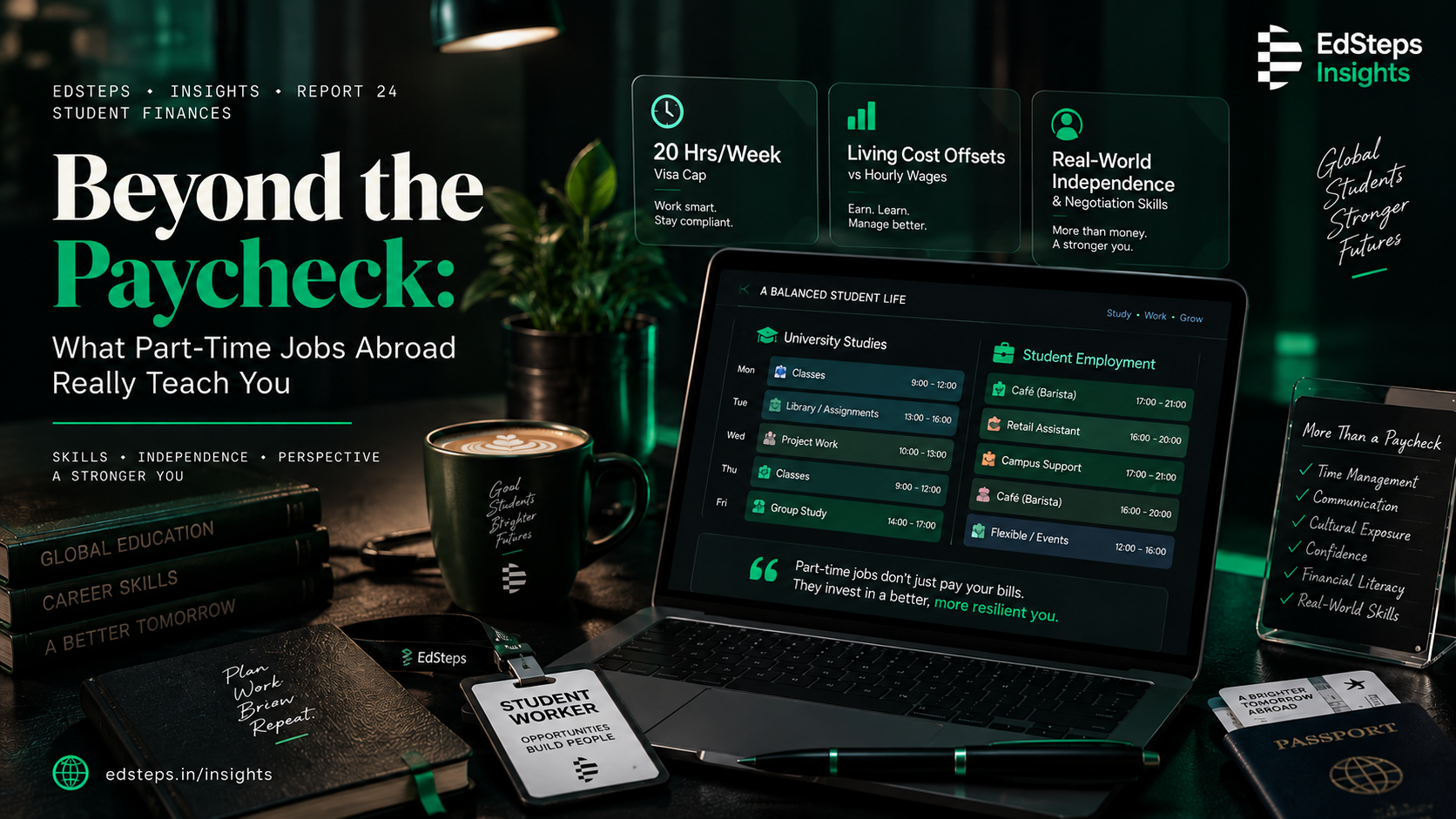
When I first moved abroad, I thought I had it all figured out: study hard, make new friends, and somehow manage life in a new country. What I didn't realize was how big a role part-time work would play in shaping my journey.
So I started where many students do: in cafés and small retail jobs. I still remember those long hours of wiping tables, carrying trays, or standing at a till after lectures. It wasn't glamorous, but it taught me something invaluable: the value of money and the dignity of hard work. When you earn every pound or dollar on your own, you learn to respect it so much more.
From Survival to the Stepping Stone
But I also realized something else: if I kept pouring all my energy into these jobs, I'd be missing the bigger picture. After all, I hadn't moved countries just to “suffice.” I came to build, grow, and move closer to my dream career.
That's when I pushed myself harder — sending endless applications, facing rejections, and feeling like I was getting nowhere. It was exhausting, sometimes even humiliating. But one day, it clicked. I landed a part-time internship.
Suddenly, the slog felt worth it. I was no longer just earning to survive; I was learning to thrive. That internship became a bridge, a stepping stone to my future ambitions.
Later, as my journey evolved, I found opportunities that were even more aligned with my career goals. The transition from survival jobs to meaningful work wasn't overnight. It required resilience, clarity, and the courage to say no when something didn't serve my bigger mission.
What Part-Time Work Abroad Taught Me
Rejections sting, but persistence pays. Learning to hear “no” and still refine your pitch is a muscle you will use for the rest of your career.
Cafés taught me people skills, patience, and humility under pressure. Internships taught me industry systems and high-stakes execution.
Don't let part-time work consume you. You came abroad to earn a life-changing qualification, not just to clock hours and get by.
Always ask yourself: does this specific shift or role bring me closer to where I want to be 24 months from now?
Choosing to earn for myself — even when I didn't “have” to — was the single most empowering decision I made abroad.
What Students Should Take Away
If you're heading abroad, or even just starting out in life, remember these three core truths:
- ✓Part-time jobs are not just about survival — they're about growth: The confidence of paying your own phone bill in a foreign currency transforms your mindset.
- ✓Don't be afraid to take the so-called “odd jobs”: They will ground you, strip away unhelpful ego, and teach you interpersonal lessons that lecture halls cannot.
- ✓Never lose sight of why you're there: Always aim for roles, research positions, or campus internships that move you closer to your target industry.
At the end of the day, a café job might pay your rent, but the right internship pays you in clarity, confidence, and direction. And those lessons will stay with you far longer than any single paycheck. Permitted student work hours vary strictly by country — compare visa allowances and hourly minimum wages across our destination guides for the United Kingdom, Australia, and Germany before booking your flights.
Preparing for life and living costs abroad?
Arranging your student services through EdSteps costs no extra — we're paid by the provider, and every option is verified before you commit. Or evaluate your profile and get an honest ROI breakdown with EdAI.
Frequently Asked Questions
Most countries allow around 20 hours per week during term time. The UK permits 20 hours, Australia allows 48 hours per fortnight, Germany allows 140 full days per year, and Canada permits 24 hours per week. Rules change — check the current position for your destination before relying on it.
Usually a meaningful share of them, but rarely tuition as well. Part-time earnings typically contribute towards rent, food and transport rather than funding the degree itself.
Retail, hospitality, campus roles, tutoring, library and administrative work, and research or teaching assistantships where available. Assistantships pay better and are more relevant to your degree, so they're worth pursuing first.
In most countries, yes, though tax-free allowances often mean students pay little or nothing. You'll usually need a local tax number before you can be paid.
It's a visa violation and consequences can be serious, including curtailment or future refusals. The permitted hours are a hard limit, not a guideline.
Both, in balance. Working a moderate number of hours generally doesn't harm academic performance and builds skills and confidence that matter later. Working to the maximum every week usually does.
In many countries yes, during official scheduled breaks. Rules vary by country and visa type, so verify rather than assume.
Often, yes. Students consistently report that the experience taught them more about independence, professional communication and time management than the earnings were worth on their own.